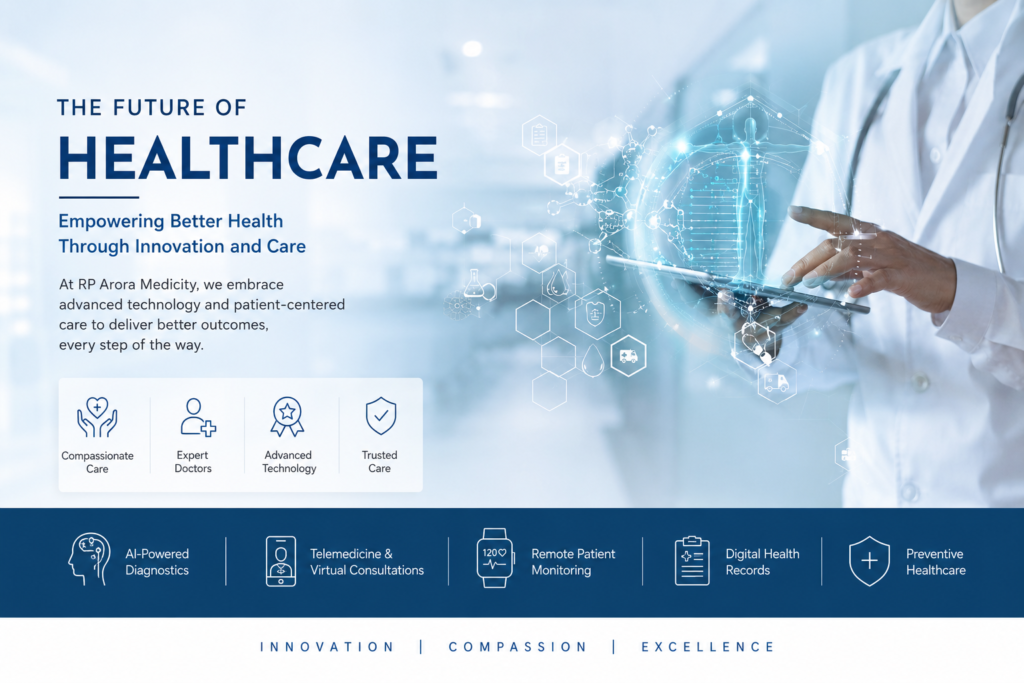
Healthcare is evolving at an unprecedented pace. Modern hospitals are no longer just treatment centers; they are becoming integrated healthcare ecosystems that combine advanced technology, expert medical care, and personalized patient experiences. In 2026, innovations such as Artificial Intelligence (AI), telemedicine, remote monitoring, and digital health solutions are redefining how healthcare is delivered.
At RP Arora Medicity, we believe in embracing advancements that improve patient outcomes while maintaining the human touch that remains at the heart of quality healthcare.
The Rise of Patient-Centered Healthcare
Today’s patients expect healthcare to be accessible, transparent, and personalized. Healthcare providers are focusing on patient-centered care models that place individuals at the core of every medical decision.
This approach involves:
- Better communication between doctors and patients
- Personalized treatment plans
- Faster access to healthcare services
- Improved patient education and engagement
- Enhanced follow-up and continuity of care
By understanding each patient’s unique needs, hospitals can deliver more effective and compassionate care.
Artificial Intelligence: Supporting Better Medical Decisions
Artificial Intelligence is transforming healthcare by assisting medical professionals in diagnosis, treatment planning, and operational efficiency.
AI-powered systems can help:
- Analyze medical images with greater accuracy
- Detect diseases at earlier stages
- Support clinical decision-making
- Reduce administrative workload
- Improve hospital workflow management
It is important to note that AI does not replace healthcare professionals. Instead, it acts as a powerful tool that enables doctors to spend more time focusing on patient care while enhancing diagnostic precision.
Telemedicine and Virtual Consultations
Convenience has become an essential aspect of healthcare delivery. Telemedicine allows patients to consult healthcare professionals remotely, reducing travel time and improving access to medical expertise.
Benefits include:
- Easy access to specialist consultations
- Reduced waiting times
- Better follow-up care
- Improved healthcare access for rural communities
- Increased convenience for elderly patients and those with mobility challenges
Virtual healthcare services are expected to continue expanding as patients increasingly seek flexible healthcare solutions.
Remote Patient Monitoring and Wearable Technology
Wearable devices and remote monitoring tools are helping patients and doctors track health conditions in real time.
These technologies can monitor:
- Heart rate
- Blood pressure
- Blood glucose levels
- Oxygen saturation
- Physical activity and sleep patterns
Continuous monitoring enables early detection of potential health issues and supports preventive healthcare strategies.
Preventive Healthcare: The New Priority
Modern healthcare is shifting from treating illness to preventing it. Regular health screenings, lifestyle management, and early intervention programs are helping individuals maintain better health and reduce the risk of chronic diseases.
Preventive healthcare focuses on:
- Annual health check-ups
- Early disease detection
- Vaccination programs
- Nutrition counseling
- Lifestyle modification
- Chronic disease management
By prioritizing prevention, hospitals can help patients achieve healthier and longer lives.
Digital Health Records and Seamless Care
Electronic Health Records (EHRs) have significantly improved coordination among healthcare providers. Digital records enable doctors to access patient information quickly, reducing errors and ensuring continuity of care.
Advantages include:
- Faster diagnosis and treatment
- Improved patient safety
- Better coordination among specialists
- Reduced paperwork
- Enhanced healthcare efficiency
The Human Side of Technology
While technology continues to revolutionize healthcare, compassionate care remains irreplaceable. The future of healthcare lies in combining advanced medical technology with skilled healthcare professionals who understand the emotional and physical needs of patients.
At RP Arora Medicity, our commitment is to provide world-class medical care supported by modern technology while maintaining the highest standards of compassion, trust, and patient satisfaction.
Conclusion
The healthcare industry is entering a new era where innovation and patient-centered care work hand in hand. Technologies such as AI, telemedicine, remote monitoring, and digital health solutions are creating opportunities for better outcomes, greater convenience, and improved patient experiences.
As healthcare continues to evolve, RP Arora Medicity remains dedicated to adopting advanced medical practices that enhance patient care and support healthier communities.
Your health is our priority, today and in the future.