
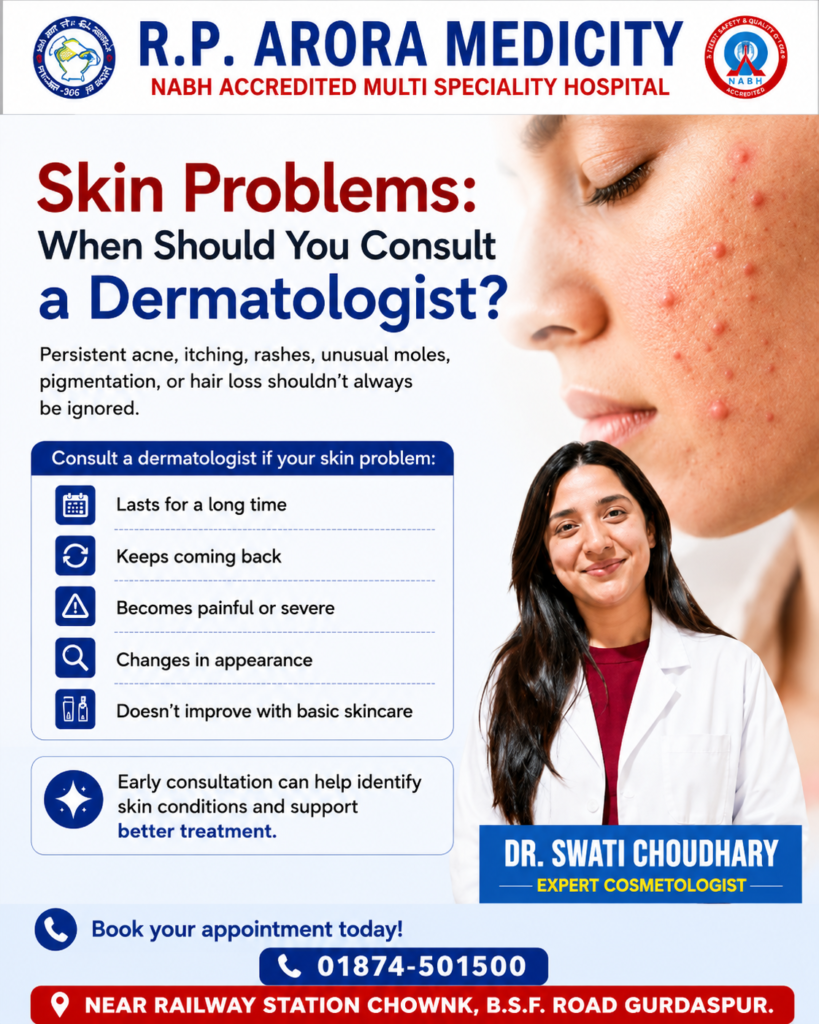
Skin Problems: When Should You Consult a Dermatologist?
Skin problems are common and can affect people of all ages. Minor issues such as occasional dryness, mild acne, or temporary irritation may improve with simple skincare. However, some symptoms can indicate an underlying skin condition that requires professional evaluation. Knowing when to consult a dermatologist can help you receive the right treatment and prevent a minor problem from becoming more serious.
Common Skin Problems
Skin problems can appear in many forms, including acne, rashes, itching, excessive dryness, pigmentation, infections, and unusual changes in moles or spots. While some conditions are temporary, persistent or worsening symptoms should not be ignored.
Common concerns that may require dermatological care include:
- Persistent acne or acne scars
- Severe itching or recurring rashes
- Eczema or psoriasis symptoms
- Fungal or bacterial skin infections
- Unexplained pigmentation or dark spots
- Excessive hair loss
- Changes in moles or skin growths
- Persistent dryness, redness, or swelling
When Should You Consult a Dermatologist?
You should consider consulting a dermatologist when a skin problem does not improve with basic care or continues to return. A dermatologist can examine your skin, identify the possible cause, and recommend an appropriate treatment plan.
1. Persistent Acne
Occasional pimples are common, but severe, painful, or persistent acne may require professional treatment. A dermatologist can recommend suitable medications and skincare based on your skin type and condition.
2. Persistent Itching or Rashes
If itching, redness, or a rash lasts for several days, spreads to other areas, or becomes uncomfortable, professional evaluation may be necessary. These symptoms can sometimes be related to allergies, infections, eczema, or other skin conditions.
3. Sudden Changes in Moles or Skin Spots
Pay attention to moles or spots that change in size, shape, color, or appearance. Bleeding, crusting, or a sore that does not heal should also be evaluated by a dermatologist.
4. Recurring Skin Infections
Repeated fungal, bacterial, or other skin infections may need proper diagnosis and treatment. Self-treatment without knowing the cause can sometimes delay recovery.
5. Excessive Hair Loss
Sudden or noticeable hair loss can have several possible causes. A dermatologist can evaluate the scalp and help determine whether treatment or further investigation is needed.
Why Early Dermatological Care Matters
Early professional care can help identify skin conditions before they become more difficult to manage. A dermatologist can provide personalized advice about medications, skincare routines, lifestyle factors, and preventive care.
If you notice a persistent or unusual change in your skin, it is better to seek professional advice rather than repeatedly trying different products on your own.
How to Take Care of Your Skin
A simple skincare routine can support healthy skin:
- Clean your skin gently and regularly.
- Use a moisturizer suitable for your skin type.
- Apply broad-spectrum sunscreen when outdoors.
- Avoid picking pimples or irritated areas.
- Keep personal towels and skincare products clean.
- Avoid using strong products without professional guidance.
- Consult a dermatologist for persistent or worsening symptoms.
Conclusion
Most minor skin concerns are manageable with proper skincare, but persistent, painful, recurring, or unusual symptoms should receive professional attention. When to consult a dermatologist depends on the severity, duration, and changes associated with your skin condition. Early evaluation can help identify the cause and guide you toward appropriate treatment.
If you are experiencing ongoing skin problems, consult a qualified dermatologist for personalized medical advice instead of relying solely on self-treatment.