Healthcare has evolved significantly over the past few decades. Today’s patients seek not only quality treatment but also convenience, coordinated care, and access to multiple medical specialties under one roof. This growing demand has led to the rise of multispecialty hospitals, which play a vital role in delivering comprehensive and patient-centered healthcare services.
At RP Arora Medicity, we understand that modern healthcare requires a collaborative approach where specialists from different disciplines work together to provide the best possible outcomes for patients.
What is a Multispecialty Hospital?
A multispecialty hospital is a healthcare facility that offers a wide range of medical and surgical services across various specialties. Unlike traditional healthcare centers that may focus on a single area of medicine, multispecialty hospitals bring together experts from different fields to provide integrated care.
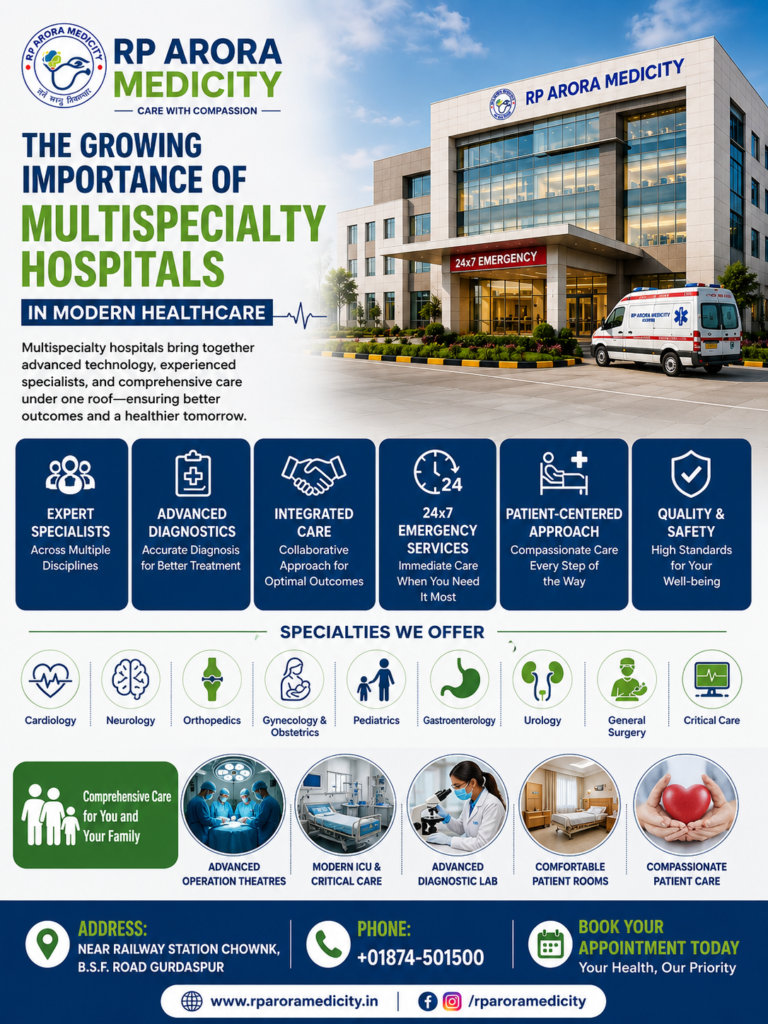
Common specialties available in a multispecialty hospital include:
- General Medicine
- General Surgery
- Orthopedics
- Cardiology
- Gynecology and Obstetrics
- Pediatrics
- Neurology
- Gastroenterology
- Urology
- Emergency and Critical Care
This integrated model allows patients to receive comprehensive treatment without the need to visit multiple healthcare facilities.
Why Multispecialty Hospitals Are Becoming Essential
Comprehensive Healthcare Under One Roof
One of the biggest advantages of a multispecialty hospital is convenience. Patients can access consultations, diagnostic services, treatments, surgeries, and follow-up care within a single facility.
This not only saves time but also ensures better coordination among healthcare providers.
Faster and More Accurate Diagnosis
Many medical conditions require evaluation by multiple specialists before a diagnosis can be confirmed. In a multispecialty setting, healthcare professionals can collaborate efficiently, reducing delays in diagnosis and treatment.
Advanced diagnostic facilities such as laboratory services, imaging centers, and specialized testing further enhance the accuracy of medical assessments.
Better Management of Complex Conditions
Chronic and complex diseases often affect multiple organ systems. Conditions such as diabetes, heart disease, kidney disorders, and cancer require multidisciplinary care.
Multispecialty hospitals enable specialists to work together, creating personalized treatment plans that address all aspects of a patient’s health.
The Role of Advanced Technology
Modern multispecialty hospitals are equipped with advanced medical technologies that support accurate diagnosis and effective treatment.
These may include:
- Digital diagnostic systems
- Advanced imaging technology
- Minimally invasive surgical equipment
- Intensive care units
- Electronic health records
- Telemedicine and remote consultation services
Technology enhances both patient safety and clinical outcomes while improving overall healthcare efficiency.
Emergency and Critical Care Services
Medical emergencies require immediate attention. Multispecialty hospitals typically provide 24/7 emergency and critical care services supported by experienced healthcare professionals and advanced life-saving equipment.
Whether dealing with trauma, cardiac emergencies, stroke, or sudden medical complications, timely intervention can make a significant difference in patient outcomes.
Patient-Centered Healthcare
Modern healthcare is increasingly focused on patient experience and satisfaction. Multispecialty hospitals are designed to provide seamless care by coordinating services across departments.
Benefits for patients include:
- Reduced waiting times
- Coordinated treatment plans
- Easy access to specialists
- Improved communication
- Enhanced safety and quality standards
- Better continuity of care
This patient-centered approach helps build trust and improves overall treatment experiences.
Preventive Healthcare and Wellness
Multispecialty hospitals are not limited to treating illnesses. They also play an important role in preventive healthcare through:
- Health screenings
- Vaccination programs
- Lifestyle counseling
- Wellness assessments
- Chronic disease management
By promoting early detection and prevention, hospitals help individuals maintain better long-term health.
Why Choose a Multispecialty Hospital?
Choosing the right healthcare facility is one of the most important decisions for patients and their families. Multispecialty hospitals offer a unique combination of expertise, technology, convenience, and comprehensive care.
Patients benefit from:
- Access to multiple specialists
- Advanced diagnostic facilities
- Modern treatment options
- Emergency medical support
- Personalized healthcare solutions
- Coordinated medical care
These advantages contribute to improved clinical outcomes and a better overall healthcare experience.
RP Arora Medicity: Committed to Comprehensive Healthcare
At RP Arora Medicity, our mission is to provide high-quality healthcare services through a multidisciplinary approach. Our team of experienced healthcare professionals, advanced medical infrastructure, and patient-focused philosophy ensure that every individual receives compassionate and effective care.
We believe that modern healthcare should be accessible, comprehensive, and centered around the needs of the patient.
Conclusion
The healthcare needs of today’s population are becoming increasingly complex. Multispecialty hospitals have emerged as an essential part of modern healthcare by bringing together expertise, technology, and coordinated care under one roof.
As healthcare continues to evolve, multispecialty hospitals will remain at the forefront of delivering efficient, comprehensive, and patient-centered medical services that improve lives and strengthen communities.
At RP Arora Medicity, we are proud to be part of this transformation, providing trusted healthcare solutions for individuals and families at every stage of life.